
|
|||||||||
East Coast VeddasFrom The Veddas by C.G. and Brenda Z. Seligmann (1911), pp. 331-335
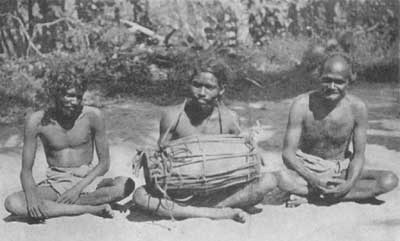
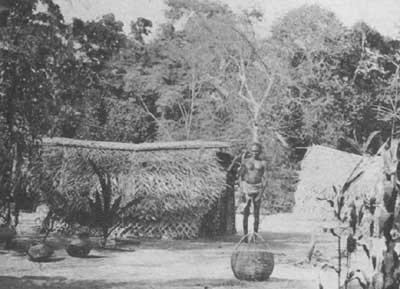
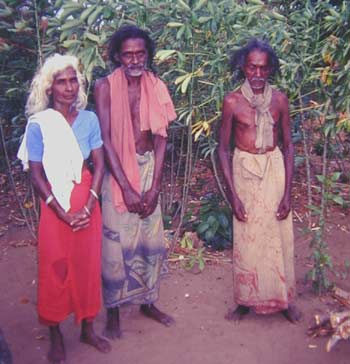
The Coast Veddas or Verdas occupy a number of settlements in the Tamil zone on the east coast. They exceed in number both the Village Veddas of Bintenne and their wilder neighbours of the borders of Uva and the Eastern Province; this is no doubt due to the fact that in the majority of Coast Veddas there is a large admixture of Tamil blood, and the comparatively thriving condition of their settlements must be attributed to the same cause. The date of their first arrival on the coast and of their subsequent intermarriage with the Tamils is quite uncertain; the latter state that there have always been Veddas in the neighbourhood of the sites they now occupy, but the Veddas themselves have a tradition that they come from inland. Knox does not mention them, but Nevill considers that they come from Sabaragamuwa (Sufferagam), being driven thence in the 17th century. "The Vaeddas say that they never were related to these Coast Vaeddas, and do not know when they came to the Coast, or where they came from, nor did they ever hear that they belonged to any waruge of the race. "The Coast Vaeddas do not know when they came or how they came, but they say that long ago their ancestors came from the Gala, far beyond the hills to the west. They also sometimes say they came from Kukulu-gammaeda and spread out along the Coast. Some say this is Kukulugam near the Verukal; others suppose it to be somewhere far away." We found that the Coast Veddas spoke of themselves as Verdas and said that long ago their fathers came from inland. They all speak Tamil, but some assert that they still know, and at times use among themselves, their old Vedda language, but when we asked the men who made this statement to speak in their ancestral dialect they spoke Sinhalese (Nevill [loc. cit.] noticed the same state of affairs, he said "Only the old men speak what they call Vaedda, which is pure but quaint Sinhalese with a Vaedda accent, as a rule, though mixed with some words characteristic of true Vaedda."). Besides this a few of the older men know the names of some of the Vedda waruge, while others are able to trace their descent to them. The Coast Vedda is darker, taller and more stoutly built than the true Veddas. In fact they generally resemble low caste Tamils, yet in almost every settlement there are one or two men shorter than their comrades and presenting an almost typical Vedda caste of countenance. The women are all much bigger than true Vedda women and would pass for Tamils, after whose fashion they dress. Plate LXVIII, figs. 1 and 2, represent Verdas from settlements to the north of Kalkudah. The Verdas build comfortable huts in small clearings, usually within a mile of the sea; they cultivate maize and pumpkins and other easily grown crops round their houses and in patches of clearing in the surrounding jungle. 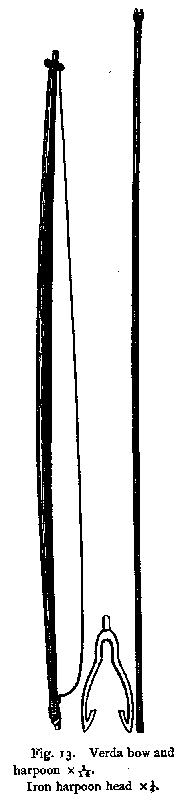
They have plenty of pots and baskets and also possess drums and fishing gear, so that their mode of life differs but little from that of the poor and low caste Tamils who are their neighbours. One, two, or more rarely, three houses stand in each clearing, and it seems that the people living in each clearing are closely related by blood or connected by marriage. The chief Verda settlements north of Batticaloa are Pellanchenai near Kalkudah 20 miles from Batticaloa and at Varkanari some 10 miles north of Kalkudah on the far side of the river which is crossed by a ferry at Valarchchenai. At Panichchenkeni some 14 miles further north is another ferry, where the local Verdas act as ferrymen, while there are two other Verda settlements some three miles beyond the ferry at sites called Vellaiade and Kandaladi respectively. There are a few Verdas at Panichchenkeni, while near Vakarai still further to the north there is a Verda settlement of considerable size. Some eight miles beyond this are two Verda settlements Parchenai and Nargantonai situated close together. We heard of other smaller settlements of Coast Veddas in the neighbourhood of Batticaloa, but these were not visited as time was short and it appeared that those Verdas we did not see differed in no respect from those we met. We were told that formerly there were Coast Veddas south of Batticaloa and later discovered that there were, and still are, certain shrines or temples within a few miles of the coast (e.g. at Mandur), which were generally recognised as Vedda shrines at which Veddas especially worshipped. This matter has been alluded to in Chapter VIII, and here it is only necessary to point out that the religion of the Coast Veddas is strongly tinged with Tamil customs and beliefs; indeed, many Verdas had Hindu sect marks upon their foreheads. Some, but not all, of the Coast Veddas know the names of the waruge to which they belong, and a few also know the names of some of the more important waruge of the Veddas inland. Uru waruge appears to be the waruge to which most of the Coast Veddas who remembered their ancestral waruge belonged, but a few men stated that they belonged to Ogatam, Kavatam, Umata or Umatam, Aembalaneduwe and Aembale waruge; the last named and the one before it probably being the same as the Aembela waruge found inland. Some of the Coast Veddas whom we questioned said they had heard of, and still knew of, certain of the old Vedda waruge, and such men were generally able to mention Morane waruge while fewer also knew of Unapane waruge. The Coast Veddas have become expert fishermen and make and use various forms of nets including a cast net. They also spear and shoot fish, using a bifid iron spear-head which they have adopted from the Tamils. For shooting fish they use the usual Vedda bow, but the arrow has become a harpoon with a shaft as long as the bow into which the iron with its running line fits loosely. One of the nets used by the Coast Veddas is seen drying behind the house in the background of Plate LX IX, fig. 2, while Mr Storey's book contains an excellent photograph of these people spearing fish. The length of the Verda bow and harpoon shaft shown in fig. 13 are 208 cm. and 220 cm. respectively. The bow is an extremely powerful weapon, its diameter at its thickest part being about 3.3 cm. In spite of the perfectly obvious fact that the majority of the Verdas are more Tamil than Vedda the old Vedda pride of blood survives and some of the older Verdas denied that they intermarried with Tamils.
Children of marriages in which the waruge of the contracting parties were known took their father's waruge, but it seemed to be a matter of no account whether or no individuals of the same waruge intermarried. Everyone avoids eating fowl and all our informants both male and female denied that they ever ate it, though often suggesting that others might do so. On the other hand, one informant who bred fowls for sale summed the matter up with an emphatic "Veddas don't eat fowls." No reason was given for this abstinence but all agreed that their ancestors had not eaten fowl, though the majority of our informants admitted that they would breed fowls for sale and kill and prepare fowls for others to eat. Beef was said to be generally avoided though it was not clear what opportunities existed for obtaining it. Deer and pig would be killed and eaten, and snakes were said to be killed without a scruple though one informant denied that he would kill a cobra. Time did not allow of any systematic study of the religion of the Verdas, but it was clear that this had been much affected by Tamil influence while yet retaining some of the more obvious outward features of the Vedda cult of the dead. Unfortunately we had no opportunity of ascertaining definitely whether the Verdas have also retained the essence of the Vedda cult, i.e. the belief in the loving-kindness and the guiding influence of the spirits of their dead, though since the leader of the dance seen at Vakarai showed the classical signs of "possession," there seems to be every reason to hold this belief at least provisionally. The dance we saw rehearsed at Vakarai was said to be performed for sickness and in thanksgiving when a good harvest had been gathered. The dance took place at night, the men dancing in relays till daylight, the women squatting on the ground, but taking no part. No food is taken during the dance, but some is placed upon the "altar" kudaram (lit, cage or small shed) which is eaten by all in the morning. East Coast Veddas: Caught between two worlds
Seligmann & Seligmann's 1911 account of East Coast Veddas Cultural Survival's 1995 survey of east coast Veddas Sinhala-Tamil Nationalism and Sri Lanka's East Coast Veddas |

| Living Heritage Trust ©2024 All Rights Reserved |