
|
|||||||||||||||
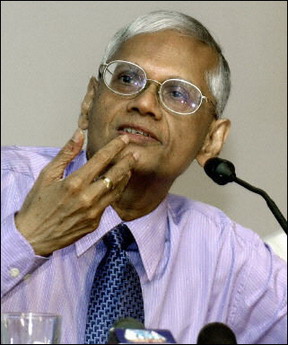
What we can learn from Indigenous Peopleby Professor G. L. Pieris, Vice-Chancellor, University of Colombo
The contemporary landscape is the very antithesis of stability and harmony. We notice that many people who have achieved success in life today are greatly troubled in mind. They do not enjoy peace of mind. Many are afflicted with illness at a comparatively early age. Business executives suffer from coronary disease. They are struck down by heart attacks at the prime of life and so on. Many people in the midst of this turbulence are looking for sustenance, for spiritual support in many different ways. Transcendental meditation in particular is very popular. Allopathic medicine we have recognised does not satisfy all our needs. Indigenous medical systems like Ayurveda, Siddha and Unani are rapidly gaining popularity in our country as indeed is homeopathy. So there are alternative systems of medicine which are rooted in indigenous values and practices, which are increasingly in demand at the present time. The modern community has recognised the evils of industrialisation carried beyond a certain point. They are now conscious of the dangers attendant upon the consumption of fruits and vegetables for example, where artificial fertilizer has been used. These are all trends that we notice in the world around us. Consequently there is a harking back to traditional values, the lifestyle of indigenous people's, their belief systems, what sustained their lifestyle, the things that they held to be sacrosanct. These are now things which are increasingly engaging the attention of contemporary mankind. I would venture to suggest that one of the basic problems of contemporary civilization is the decline of traditional values without any viable or fulfilling substitute. We are all conscious of a significant hiatus or lacuna. That is one of the challenges which mankind faces in the age in which we live. 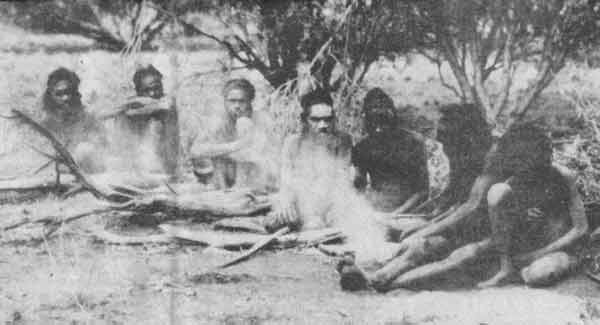 If we consider traditional value systems, I think there are three principal strengths that are associated with those value systems. First of all there is a certain emphasis on security. Security — that is something that is sadly lacking in our own civilization and culture. The security came from certain basic relationships, the family, the temple or the church as the case may be, certain relationships which were central to the life of the community at that time. These were overlapping and interlocking relationships that imparted meaning and substance to life. In times of trouble there were people to fall back upon. There were persons whose guidance was forthcoming and there were in-built safeguards that sustained social life at that time. Now those are the areas in which modern life is vulnerable, precisely because of the absence of those supports, and props and safeguards. So the first theme is security. The traditional values were buttressed; they were fortified and sustained by an emphasis on security.
Secondly, there was a sense of balance. There was a perceptive equilibrium that was achieved. I think that is equally important. Man's conquest of nature .was always tempered by a certain moderation, a certain restrain in the exploitation of the resources of nature. There was a recognition of the sanctity the environment, an acknowledgement that natural resources could not be tapped and exploited beyond the point without inflicting irretrievable damage on the heritage to which we are heirs. By all means there was a readiness to benefit from the exploitation of the physical environment, but it was done in a manner that was restrained, with some thoughts for posterity. So there were conflicting interests and the balance was perceptively struck between these competing forces. That is the second element that I would identify in traditional values the merit of balance. The third hall mark which I would identify in a traditional value system is that of contentment. People were generally content with their lot in life. There was not an overweening desire to extend oneself, to expand the horizons of achievement in a such a manner as to stultify one's own initiatives. Today, we live in a world where we are striving to achieve more and more. We want more and more material goods most of which we do not need, and most of which we lack the resources to pay for. It is a rat race. There is so much strain, so much tension. What I slacking is the inner spirit of well being, of contentment. Now that is something that the traditional value system enjoyed in abundant measure. Accumulative impact of these values — balance, contentment, and security — gave a certain distinctive quality and character to traditional values I think those can be recognized as an antithesis to the kind of values that pervade contemporary civilization All this probably has happened because we have been continually moving away from nature That, I think, is a fundamental problem Recently the international community and indeed international organizations under the aegis of the United Nations have been focusing upon ways and means of restoring, at least in part, some of this stability that was characteristic of traditional civilizations, the civilizations that are associated with indigenous peoples Convention 169 of the International Labour Organization is an example of that trend The pith and substance of that resolution is to emphasize that indigenous people are entitled to certain inalienable rights including control of their resources, dominion resources That I think has been one of the problems that the modern world has begun to grapple with An instance of that relates to systems of land tenure which were entrenched among indigenous people I do not know how many of you are familiar with a very celebrated decision that was handed by the High Court of Australia — that is the most exalted judicial tribunal in Australia about two and a half years ago I refer to the Marbo case where the High Court of Australia had to consider the question whether, when the European settlers came to Australia, the land that they found was res nulleus, that is, a land that did not belong to anybody at all and was available for occupation and acquisition Does that constitute a fresh point of departure in the acquisition of title to land? In other words, does a modern legal system recognize that the people who inhabited those lands during the period prior to the arrival of the European settlers did not enjoy any kind of security of tenure in respect of that land They had no title that was capable of recognition by law and the European settlers were in a position to move in and to take that land as though it belonged to them by virtue of conquest and acquisition. In what is perhaps one of the most striking judicial developments in Australia during the last decade, the majority of the High Court held that this was not a permissible construction of law because the aboriginal people did have tenure in respect of their land which was fully recognised by the contemporary legal system. Consequently the Western settlers did not acquire good title in respect of some of those lands. Now this has become a very volatile political problem in Australia at the present time Prime Minister John Keating is struggling to give expression to some of the practical implications of that judgment in the teeth of very vigorous opposition There has been a great deal of agitation in Australia on these lines Does this mean that the white settlers can be dispossessed from some of their lands? Will there be confusion with regard to title to land as a consequence of the recognition of the rights of aboriginal people? Can the whites be thrown out of their lands in view of the decision that was handed down by the High Court of Australia? Now some of these issues have arisen but the incumbent government of Australia has had the courage and the fortitude to uphold some of the principles embodied in this decision pronounced by the High Court of Australia. There has been similar developments which are reflected in pronouncements by international tribunals An example is the judgment by Justice Weeramanthry, a Sri Lankan who now sits on the International Court of Justice in Nauru arbitration Nauru is a small Pacific island and the people of that country sought legal redress They claimed compensation from an international tribunal for the massive mismanagement of their resources and the actions of colonial powers in exploiting the natural resources of that country to the detriment of the indigenous population Nauru. It was established that large quantities of phosphate had been removed from Nauru.
The people of the country had been deprived of their natural wealth and it was held that they were entitled to substantial compensation by way of legal redress for the wrongs that had been inflicted upon them. So those developments have occurred both at the national level and at the international level. Now let us consider some of the rights that are important to indigenous people and the ways in which these have been recognised by contemporary legal systems. It is important to recognise here that values and attitudes vary. We should not assume that our approach is the only possible approach, that nothing else is rational or logical. About five years ago, I gave a series of lectures in the University of Papua New Guinea in Port Moresby, and in the course of my visit to Papua New Guinea I learnt some very interesting things about the legal system of Papua New Guinea with particular reference to their attitudes to land tenure. In Papua New Guinea, of course, there is a substantial aboriginal population and they are very sensitive to the rights of indigenous people. The cornerstone of their system of land tenure is collective ownership. Land is not owned by individuals. It belongs to a tribe or to a community and it is not merely a matter of moral obligation but a matter of mandatory and enforceable obligation, that the more vulnerable, the more disadvantaged members of the tribe are entitled to be supported by the more affluent people belonging to that tribe. There is the concept, there is the notion that land is held in trust. Land is not something that you own absolutely. You can use it, you can abuse it, you can exploit it in whatever way you like. That is essentially a Western concept that goes back to the Roman law, the notion that there is no abuse possible. It is yours to do with as you please. That is a Western concept which has its roots in Roman jurisprudence. But certain Eastern legal systems which are fortified by indigenous traditions approach these problems from a totally different perspective. Land is something that you receive from God by way of trust. It is yours to handle for the time being. But you are duty bound to utilise those resources in a manner that is beneficial to the community at large. It is a sacred trust that you are required to discharge. Now that is very much the ethos, the rationale of land tenure in Papua New Guinea. Then let us take the attitude to justice Professor Gananath Obeysekere, in a recent work of his describes some of his experiences in the southern part of Sri Lanka. He says that when he went to Kataragama, he spoke to some of the devotees there and he asked them, "If you have a problem, what will you do? Would you seek the assistance of the courts? Will you take your problem to the judges of the established courts and will you ask them to hand down a judgment that will provide you with a solution to your problem? He says the majority of the people he spoke to answered emphatically in the negative. They were horrified by the suggestion that they should invoke the assistance of the courts of law. They said ‘No, not at all. We would greatly prefer to seek the assistance of the Goddess Kali. It is from the Goddess Kali that we will expect relief because the Goddess will understand our problem and will give us the relief that we want. The courts will not understand. That is a different world. Different values, different assumptions. There is nothing in common between them and us and it would be quite fanciful and unrealistic to expect the courts to understand our problems and sort them out in a pragmatic and satisfying manner.
So there is this deep cynicism which characterises the attitudes of ordinary people to the established courts of the Republic. There is a certain perceived sense of alienation from their experiences and from their priorities of what is important to them in life. So there is this process of alienation which I think one needs to be conscious of. Then take again traditional attitudes to government and to political culture. Those who believe in the freedom of the individual and the need to preserve and to develop that sense of freedom generally endeavour to do that in keeping with Western political culture by evolving a system of checks and balances. The assumption that we make so readily is that freedom is synonymous with checks and balances that are part and parcel of a political system. We believe with Lord Action that power corrupts and absolute power corrupts absolutely. So we believe that concentration of power in the hands of an individual or a tribunal would necessarily be inimical to the cause of freedom. We therefore want to ensure that power is restricted, it is circumscribed, and it is curtailed. That is very much our approach to things. But that is not the approach of indigenous people. Indigenous people assume that power belongs to a king, a ruler. That is something total; it is something absolute. It is not amenable to restriction or curtailment. Of course, there are restrictions. But these are not restrictions that are imposed externally. These are restrictions that come from within. The king or the ruler is bound by certain matters which are part of his conscience and that the restraints that accompany the exercise of power are restrains that arise from within They are part of the psyche of the ruler. There is this story about the traditional Tamil King Elara who was always accessible to his people and the idea was that any person who had a complaint to make to the King could go to the King's chamber at any time, ring the bell and tell the king about his problem and redress would be personally given by the ruler himself. So there is absolute faith in the benevolence of the ruler, the notion of benevolent despotism. The benevolent despot does not use his power in a tyrannical or dictatorial manner. It is tempered by certain qualities of mercy and of gentleness. But those qualities are not enjoyed upon the ruler by any external norms. Those are internal restraints. That to my mind is the significance of the fundamental contrast. Modern jurisprudence believes in the restriction of governmental power by invoking external norms. The separation of powers, the restriction of the powers of the President or of Parliament, justifiable fundamental rights, which are incorporated in constitutional instruments. These are all external forms. But traditional values of indigenous people emphasise the internal content of those restraints rather than the external levers. So these are some of the contrasts between modern attitudes to justice, to government, to tenure of land on the one hand and the aspirations of indigenous peoples. Now one matter that we should always be suspicious of, I think a safeguard that is very essential, is to refrain from endeavouring to incorporate these values mechanically into a modern system. We must not feel the aboriginals, the indigenous people, have their own values. There is some value in those, there is some merit in those. Our system is different. We have therefore to carve out some sort of niche in our own system to accommodate them. That is we seek to accommodate them in a periphery of our own system. I don't think that is a helpful premise. This has been very much the approach in countries like New Zealand, where the Maoris, for example, had had certain rights conceded to them and a sustained attempt has been made to bring them into the system, for example by means of quotas. That is very much a part of governmental policy in New Zealand at the present time. Then it comes to admission of children to schools or to universities, recruitment to the public service, and other such benefits. There is a certain quota of places that tend to be reserved for Maoris. Now the assumption that this is a form of reverse discrimination or 'affirmative action' as it is called in American jurisprudence. The assumption is that these are people who have not had the benefits and the advantages that are available to the rest of the population. So you must not judge them by the same standard. You have to recognise that they have a special claim because of the historical injustice that they have suffered. Now that is, I think, a self-defeating point of view. In the first place it smacks of condescension. You are not good enough, but we will make room for you because we recognise that we owe you something. You have suffered so much in the past and to allow you, to enable you, to better your own condition in life, we will make these facilities available to you, although you are not in a position to compete with the other sections of society on the basis of equality. It cannot be achieved, it cannot be accomplished on the basic of quality, but we will make special concessions to you and we will accommodate you although, in fact, you are found to be lacking. Now I think that is destructive. It erodes self-confidence and self-esteem and for that reason I think quotas are not really acceptable from the standpoint of policy.
There are other objections to a system of quotas. As the Maoris begin to be educated, it may well be that the time will come they can gain for themselves more than the allotted places, the number of places you that allot in terms of the quotas that you determine as being appropriate to fulfill their needs. So the quota system, although intended to benefit them originally, may in the fullness of time actually operate to their disadvantage. So there are many reasons why the quota system cannot be really be commended in terms of policy. But again the whole approach that is reflected in the quota system is open to cogent criticism on the basis that the objective of that method is to bring these people into our system. The assumption is that our system is best. It is what would provide the answer to the needs of contemporary society here are these people on the fringes. We need to accommodate them and we will devise these artificial methods to accommodate them within our own system. I don't think that is an acceptable point of departure. One other point which I wish to make is this, that many of these problems that we encounter in the world today arise from too strong a centralising tendency. Historical and anthropological research in our own country has shown that our lifestyles prior to the tank civilization of Anuradhapura and Polonnaruwa, that our civilisation was very much a micro-civilization. There were little hamlets in different parts of the country and their culture and their values were different. They differed significantly from hamlet to hamlet. There really were not patterns of life and thought which embraced large communities. All these changed with the development of roads, canals and waterways, the advent of western civilization with all its secondary influences. There was a very significant centralizing tendency. If we are to arrive at a realistic solution we must approach the problem in a different way recognising that centralising tendencies necessarily have their limitations. What are the matters that the people of the grass roots level in their own village communities can adequately handle for themselves? What are the matters that they can deal with and evolve satisfactory solutions? There will be certain categories of matters which do not lend themselves to treatment in that manner at that level. Those matters you hand over to the next tier, to the next level. What cannot be done at the Gamsabha level or the village council level, you hand over to the Pradeshiya Sabha which is the next level. From the Pradeshiya Sabha you go up to the Provincial Council. From the Provincial Council to the national Parliament, and so on. That to my mind is a much more realistic, a much more pragmatic exercise in devolution of power. I think that is the methodology that is very much reflected in the attitudes and values of indigenous people. And that is a very valuable lesson that we can learn from the entirety of their experience. That I think is an important point. Then it is also necessary to focus upon the role of the media. We live, of course in an age of technology and we have abundant information available to us. The recent developments connected with Internet are fascinating, they are indeed novel and they could not have been contemplated even two decades ago. But what is lacking is expertise to deal with, to analyze to synthesize the large volume of information that is available to us. And also relevant in that regard is the role of the bureaucracy. We have a highly central bureaucracy and whatever we are able to achieve in regard to the protection of the rights of indigenous people, will be a reality only if the bureaucracy is sufficiently sensitized. What we need is a sensitive bureaucracy, but that is precisely what is lacking in many parts at the world of the present time. So those are some of the infirmities and the deficiencies of which we should be acutely conscious. If we are in earnest about protecting the rights of indigenous peoples, I think we must also recognise the sanity of customary law. If you are interested in the rights of the indigenous peoples and the legal landscape, it is absolutely essential that customary legal systems should be protected. In our own country we have in many matters of statutory regime that exists in juxtaposition with the customary laws. We have the Kandyan law, we have the Thesavalamy, we have elements of Muslim law that regulate matters such as marriage customs, rights of succession. Then, rights in respect of land. These are all matters that are regulated by customary legal systems that apply to different sections of the population. There are also statutory provisions which can be invoked by any section of the community. For example, a Kandyan or a person subjective to Thesavalamy can marry under the General Marriages Ordinance. We have a general statute called a General Marriages Ordinance. Any person who may be subject to a principle, to a regime of customary law, can repudiate that law. He is capable of repudiating the customary law and he can choose instead to be governed by the provisions of a statute that has general application. So there is really a choice of law. There is, as it were, an internal conflict of laws within the national legal system. It is necessary to protect and to preserve these spheres of operation of customary laws and to ensure that statute law does not make unwarranted inroads into the customary systems that are applicable. And that can be illustrated in many ways both in regard to the substantive law and in regard to procedural law. The indigenous systems play down as much as possible the cohesive element of law. They believe very much in methods of conciliation and arbitration. At the lowest level, the village elders will get together, people who are respected in the community will endeavour to resolve these problems in a speedy and amicable manner in a manner that is acceptable to both parties to the dispute. And you proceed like that from tear to tier to tier and it is only the most complex cases which are not capable of resolution by any other method that go up to highest judicial tribunal in the country. But in Sri Lanka they go to the Supreme Court as a court of first instance rather than as a court of final instance. We have not applied any system of arbitration or conciliation at all and we are very much wedded to an adversarial tradition. The whole of our legal system is very adversarial in content and complexion. Now that again is a dramatic contrast to the attitudes of indigenous peoples and the basis on which their legal and judicial system is constructed. It seems to be quite ridiculous to apply the adversarial system in typical cases relating to the violation of fundamental rights. The adversarial system works well enough in situations where the two parties are more or less evenly matched in terms of strengths and resources. But if you have, on the one hand, the all-powerful state and, on the other hand, a poor villager who complains of harassment by the police and then you expect to apply an adversarial system, it is obvious that the results will be far from impressive. Today our approach is that the person who complains of an infringement of his fundamental rights must undertake the burden of establishing his case. He must collect all the necessary documents from the files, he must produce the necessary witnesses, he must make the necessary affidavits available to the courts and it is for him to establish in their entirety the elements of his case. That is obviously a futile undertaking. It is not something that he is capable of doing at all because he finds himself pitted against the almost unlimited resources which are at the disposal of the state. So this whole tradition of adversarial jurisprudence which we have uncritically applied in all spheres is something that has deprived a great part of our judicial system of meaning and substance. And that is certainly a deficiency that indigenous people have avoided consciously and studiedly in formulating the basis of their own legal and judicial system. If you examine the character of an indigenous legal system, you will find that the principles are very simple, unsophisticated, lacking in complexity. In most indigenous legal systems the basis of the law of contract is simply the principle that your word is sacred. If you give the other person your word, you enter into a transaction on that footing, then you are liable if there is any infraction any violation or infringement of your promise. Later legal systems, especially the legal systems inspired by the Western tradition, took on a certain dimension that is entirely lacking in the traditional or indigenous legal systems.
For example, the English law adopted the criterion of consideration. I don't want to go into technicalities, but contrasting primitive and indigenous legal system said all that is necessary to make your promise enforceable is proof that you intended to be bound. You made a solemn promise by which you intended to be bound and without anything more that is sufficient to make you liable if you break your promise. That is all that is important. The intention to be bound by the promise that you have offered to the other contracting party. In the primitive legal system that is sufficient to make a contract enforceable. Not so under English jurisprudence where a promise is enforceable only if it is buttressed by the concept of consideration. That is, if I give you a promise, you can sue me on that promise only if you have given me something of value in return for my promise to you That is the passing of consideration. The transfer of something that is of pecuniary or monetary value. That is intrinsically an English concept that is part and parcel of the English common law tradition. It has no equivalent, no parallel in an indigenous legal system. So as you move away from nature, as you move away from basic morality, as you move away from the attributes of human nature, you find yourself embroiled in complexities which defeat the very purposes of the legal system. I think that is a reality that we need to be conscious of when we evaluate the character of indigenous legal systems in comparison with contemporary legal systems. To my mind the fundamental concept that is embodied in traditional systems of law and morality is just this. The Roman jurists put it in a particularly convincing way when they spoke of the concept ex aequo et bono. That is an equitable jurisdiction English law in due course spoke of equity. That is the idea that you will do good, you will do no harm and this equitable doctrine was utilised to fill any gaps in the existing law. Today take the traditional law of Japan. In regard to the whole of labour relations, Japanese labour law even today has this large equitable content. The whole relationship between the employer and employee is strongly pervaded by this equitable premise. The employer is a kind of a father figure. When he takes you into his employment he undertakes to do all that is necessary for the well being of the employee. It is a system that is lacking in details. Details are not spelt out. What are the reciprocal obligations of employer and employee? The Japanese system is very sparse in content.
That is basically the approach of the Japanese legal system which has a great deal in common in that regard with an indigenous legal system. So, those are some of the ideas that I wanted to share with you in highlighting the essential features of the indigenous culture and indigenous law as compared with a contemporary approach to law and society. I think we need to be on our guard against the assumption that our system is superior. We know it all, they do not, and we have to be condescending in our desire to accommodate them. Also we must recognise there are certain things in traditional custom and law which may defy our understanding. We may not be able to understand because our experience has been wholly different and we must be reluctant to reject what we are incapable of understanding. So those are some of the thoughts that should be uppermost in our minds as we embark upon this year that is devoted to the rights of indigenous peoples and the preservation of their culture. I understand that this is the first of a series of lectures that will address different aspects of the rights of the indigenous peoples. I think that this is a very timely initiative because much that is wrong with contemporary civilization can, I think, be rectified by injecting to our culture some of the elements that were so rich in indigenous civilizations. Therefore there is no better time than this to embark upon this endeavour. And may I, in conclusion, thank you very much for your invitation to me to share my thoughts with you this evening. I have been greatly privileged to be here with you and I thank you for that opportunity. Case Study: The Plight of Sri Lanka's Wanniya-laeto
|


| Living Heritage Trust ©2024 All Rights Reserved |